Google November 2026 Core Update: What We Know and What to Do Now
Google’s latest update is here: the November 2026 core update. It’s a big “core” update, and forecasters expect a lot could change. Some even compare it to the well-known, or perhaps notorious, Panda update from 2011.
News: SEOPublished 14 November 2026, 6 min read, by Joep de Kok, founder of Geekie Creative & IT · Lees dit artikel in het Nederlands
What is the November 2026 core update?
Every so often, Google updates its search systems, and that can have a big impact on the positions you’ve worked hard to earn in the search results. A core update is one of those broad changes: not a targeted penalty for one type of website, but a reassessment of how Google evaluates pages.
Google itself calls this a “regular update” designed to better surface relevant, satisfying content from all types of sites. It’s the third core update of 2026, after March and May. According to the Google Search Status Dashboard, the rollout began on November 10 at 10:06 a.m. Pacific time (19:06 CET).
Google says the rollout may take up to two weeks, which would put the finish around November 24. Expect some delay, though: according to Coalition Technologies, the previous two November core updates both ran longer than three weeks.
Why is it being compared to the Panda update?
The Panda update of February 2011 was one of the biggest changes Google ever made. According to Google, the first version noticeably affected almost 12% of English-language queries. Panda mainly targeted “content farms”: sites full of thin, interchangeable articles written mostly to rank. Many websites saw their traffic drop by half.
The Panda comparison comes from the SEO community, not from Google. In the days before the launch, SEO experts were already seeing significant ranking swings, and analyst Glenn Gabe said all signs point to a powerful update. Whether it actually turns out Panda-sized, we’ll only know once the rollout is complete.
What are SEO professionals seeing so far?
While some SEO professionals see little to no effect, others are noticing clear shifts in their results. The data shows that a lot is moving:
- Semrush Sensor recorded a volatility score of 9.4 out of 10 on November 11, against a monthly average of 6.6 (got.media).
- 24 of the 25 tracked industries were above their own monthly average.
- Trackers are also seeing heavy movement in AI Overviews since the rollout began.
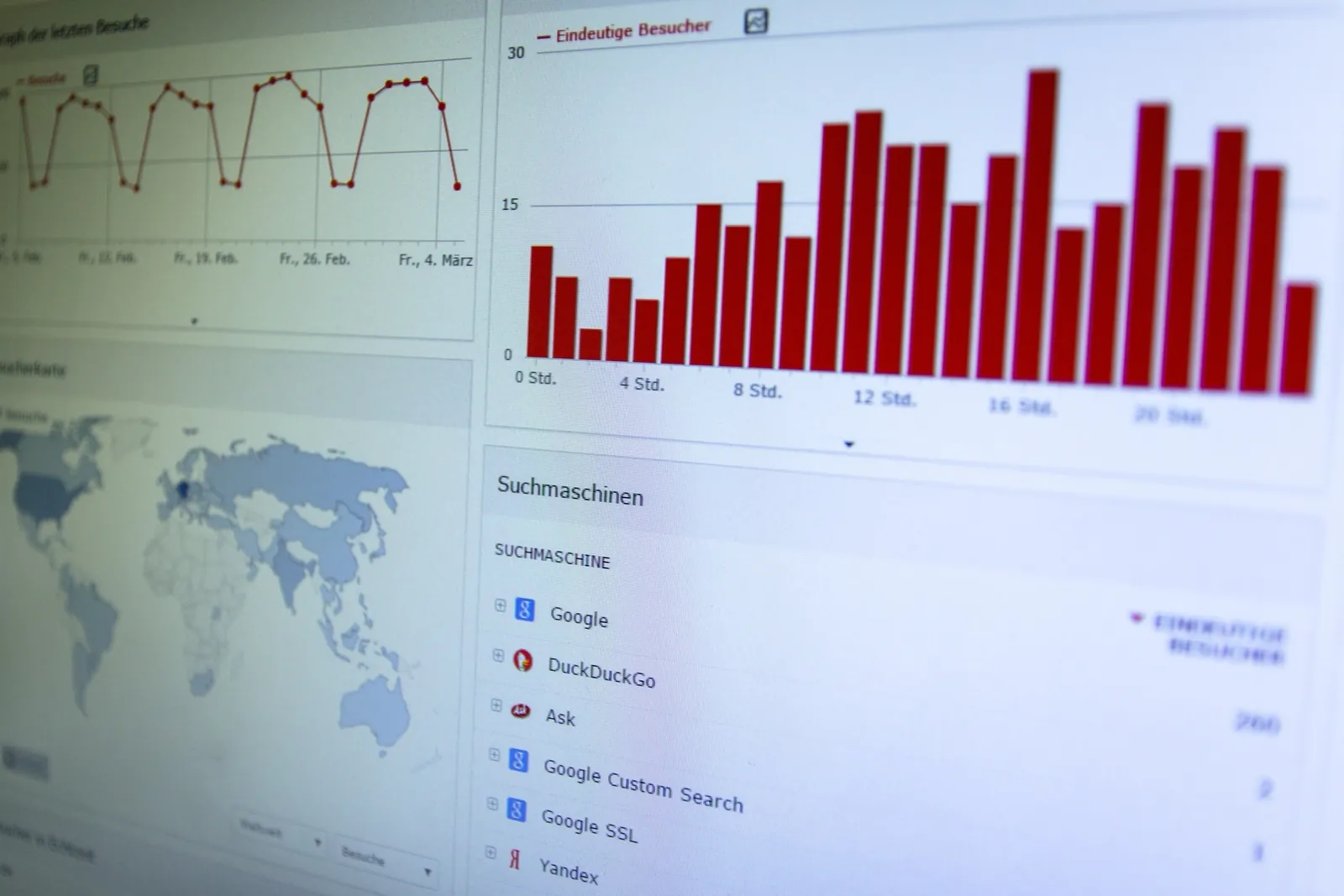
One caveat: the volatility started around October 27, well before the official launch. So not all of the movement is caused by this update. For comparison: after the March 2026 core update, 79.5% of top-3 results changed position.
Original content vs. AI content: what’s rumor and what’s policy?
There’s a lot of talk about how much Google values original content, and about avoiding large-scale, automated AI content without substance. Worth knowing: Google hasn’t named any specific targets for this update. Claims that it targets AI content aren’t supported by the announcement.
What is established is Google’s general policy:
- Scaled content abuse is spam. Google’s spam policies treat producing large numbers of pages without added value as a violation, whether that’s done with AI or by people.
- Low effort = lowest rating. Google’s Search Quality Rater Guidelines say content created with little effort or originality and no editing can receive the lowest rating. Generative AI is named as an example.
- Google has cracked down on this before. According to Google, the March 2024 core update led to 45% less low-quality, unoriginal content in search results.
My take. AI isn’t the problem; AI without substance is. Never let AI publish content unchecked and at scale. Use it as a tool, and add what AI can’t: your own experience, real-world examples and your own opinion.
What should you do during the rollout?
It’s wise not to take immediate action while the update is rolling out. In practice:
- Do: keep publishing and updating blog posts. That’s no problem.
- Don’t: make major changes to your SEO structure, like changing URLs, reworking redirects or reshuffling your menu and internal links. During a big update that’s never a good idea, because afterwards you won’t know what caused the effect.
- Measure, but later: Google advises waiting at least a full week after the rollout completes. Then compare that week’s Search Console data with a week before the start. Use November 3–9 as your baseline week.
Run an online store? Pay extra attention: the rollout ends just before Black Friday. Swings during that period aren’t necessarily caused by your promotions or your site.
Past major Google updates
Google updates its services every so often, and that sometimes has big consequences for the positions SEO professionals have managed to claim in the search results. These were the best-known updates in the past:
| Year | Update | What was it about? |
|---|---|---|
| 2011 | Panda | Thin content and content farms; almost 12% of queries affected |
| 2012 | Penguin | Bought and spammy links |
| 2013 | Hummingbird | Better understanding of what a search query means |
| 2015 | Mobile-friendly (“Mobilegeddon”) | Priority for sites that work well on mobile |
| 2018 | “Medic” core update | Big shifts for health and finance sites |
| 2019 | BERT | Better language understanding of queries |
| 2022 | Helpful Content Update | Content for people instead of search engines |
| 2024 | March 2024 core update | 45% less low-quality, unoriginal content |
| 2026 | March 2026 core update | Rollout of just over 12 days |
| 2026 | May 2026 core update | Rollout of almost 12 days |
| 2026 | November 2026 core update | Still rolling out |
The older updates were separate systems with their own names. Google has only announced broad “core updates” since around 2018. The 2026 rollout durations come from the Search Status Dashboard.
The update at a glance
| Feature | What we know |
|---|---|
| Name | Google November 2026 core update |
| Type | Broad core update (not a spam update) |
| Start | November 10, 2026, 10:06 a.m. PT (19:06 CET) |
| Expected duration | Up to 2 weeks (around November 24, 2026) |
| Scope | Global, all languages |
| Number this year | Third core update of 2026, after March and May |
| What Google says | A regular update to better surface relevant, satisfying content |
| What Google doesn’t say | No specific targets, including AI content |
| Advice during rollout | No major SEO changes, keep publishing |
| When to measure | At least one week after completion, compared with a week before November 10 |
Conclusion
So there seems to be real value in creating original, unique content for your blog. Still, most of it is rumor from the grapevine for now, and it’s a matter of waiting until the update has fully rolled out. One thing won’t change: Google rewards content that genuinely adds something, and that’s never a bad bet. Want help building on that? Take a look at our SEO and GEO services.
Frequently asked questions
When will the November 2026 core update finish?+
Google expects up to two weeks, so around November 24, 2026. Previous November updates ran to over three weeks. The Google Search Status Dashboard shows when it's officially complete.
Does Google penalize AI content?+
Not automatically. Google looks at the quality and usefulness of content, not how it was made. Mass-producing pages without added value is spam, though, whether or not AI is involved.
My rankings are dropping. What now?+
Stay calm. Rankings often bounce up and down during a rollout. Only analyze one week after completion, and compare with a week before November 10.
Should I change my website now?+
No, not during the rollout. Publishing new posts is fine. Save major structural changes until you know what the update did to your site.
Sources
All sources were checked on 14 November 2026.
- YouTube video on the November 2026 core update (original source for this article)
- Google Search Status Dashboard: November 2026 core update (official announcement, November 10, 2026)
- Google Search Status Dashboard: ranking update history
- Google Search Central: core updates
- Google Search Central: spam policies (including scaled content abuse)
- Search Engine Land: Google November 2026 core update rolling out now
- Search Engine Journal: Google’s November 2026 Core Update Starts Rolling Out
- Search Engine Roundtable: Google November 2026 Core Update Rolling Out
- Coalition Technologies: The November 2026 Google Core Algorithm Update
- got.media: Semrush Sensor data, November 11, 2026
- Delante: Google November 2026 Core Update
- MonsterMegs: Google November Core Update And Black Friday
- Google Inside Search (2011): High-quality sites algorithm launched
- Wordtracker: Google Panda
- Search Engine Land: March 2024 core update rollout is now complete
- Search Engine Land: quality raters and AI content
Share this article
See more of Geekie on Google?
Pick Geekie as a preferred source, and Google will show you our articles more often in Top stories.
Pick Geekie as a preferred source (opens in a new tab)Further reading
Is your website pulling its weight?
Geekie builds websites that get found in Google and in AI answers, for a fixed price. Tell us about your site and we will tell you honestly what would help.